
FIFA World Cup 2026 in North America: The Biggest Show on Earth Has Finally Come Home
June 11, 2026 – July 19, 2026 | United States, Canada, Mexico
It has been thirty-two years since the roar of a World Cup crowd echoed through American streets. In 1994, a nation discovered it could fall in love with a sport it barely knew. Now, in 2026, that love affair resumes — only this time, it brings two neighbors to the party, a tournament expanded beyond anything the world has ever seen, and an electric sense that history is not just being witnessed but actively made.
The FIFA World Cup 2026 is the largest sporting event ever staged. Forty-eight nations. One hundred and four matches. Sixteen host cities spread across three countries and two time zones. The numbers alone are staggering. But numbers are just the skeleton. The real story is what this tournament means: to the cities hosting it, to the fans traveling thousands of miles for it, and to the sport itself, which is still fighting — quietly but relentlessly — for its rightful place at the center of American sporting life.
Why North America? Why Now?
The decision to hand the 2026 bid to the United States, Canada, and Mexico was never really a gamble. When FIFA announced the host in June 2018, the joint bid from these three nations offered something no single country could match: scale, infrastructure, and a combined soccer appetite that had been building for a generation.
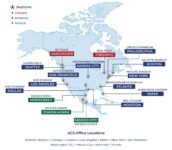
The United States carries the heaviest load, hosting 78 of the 104 matches across eleven stadiums in eleven cities. Canada and Mexico account for the remaining twenty-six matches across five venues. The logistics of running a tournament across an entire continent would have been unthinkable a decade ago. Today, with the infrastructure already in place — largely in the form of NFL stadiums repurposed as some of the most technologically advanced sports venues on the planet — it looks almost seamless.
There is also timing. Soccer in the United States is no longer the niche pursuit it was in 1994. MLS has grown from ten clubs to twenty-nine. The USMNT has a generation of players performing at the highest levels in European leagues. Cristiano Ronaldo plays in Riyadh now, but the talent pipeline running through American academies to the Bundesliga and Premier League is thicker than it has ever been. A home World Cup arrives at exactly the right moment.
The Venues: A Continental Stadium Tour
New York New Jersey Stadium — East Rutherford, New Jersey
One MetLife Stadium Drive, East Rutherford, NJ 07073
This is where the whole thing ends. MetLife Stadium — officially renamed “New York New Jersey Stadium” for the duration of the tournament, per FIFA’s standard commercial-stripping rules — will host the World Cup Final on July 19, 2026. With a FIFA configuration capacity of 82,500, it is the largest venue in the tournament, the home of both the New York Giants and New York Jets, and the symbolic crown jewel of the entire competition. Eight matches total take place here, including five group-stage games before the knockout rounds build to their crescendo. No World Cup final location has ever carried quite this kind of civic weight. The shadow this building casts across the New York metropolitan area for the duration of the tournament will be unlike anything the region has experienced since the 2001 World Series.
SoFi Stadium — Los Angeles, California
1001 Stadium Drive, Inglewood, CA 90301
The most visually spectacular venue in the tournament. Opened in 2020 at a cost of five billion dollars, SoFi Stadium features a translucent roof, open sides, and a 70,000-square-foot double-sided video board that hovers over the field like something out of science fiction. It is surrounded by an 8.5-million-square-foot entertainment complex. Los Angeles will host the United States’ opening match — against Paraguay on June 12 — and a quarterfinal. For a city defined by spectacle, SoFi is the perfect stage.
AT&T Stadium — Arlington, Texas
One AT&T Way, Arlington, TX 76011
Everything is bigger in Texas, including the stadium. AT&T Stadium in Arlington, home of the Dallas Cowboys, is a retractable-roof behemoth that makes no apology for its excess. It has hosted Copa América and Gold Cup matches for years, so the learning curve for international soccer is already flat. Dallas-Fort Worth is the fourth-largest metropolitan area in the United States, and it will turn out in force.
NRG Stadium — Houston, Texas
One NRG Park, Houston, TX 77054
Houston brings the heat — literally and figuratively. NRG Stadium’s retractable roof makes it one of four American venues specifically chosen to manage the brutal summer temperatures. Houston hosted a Super Bowl in 2004 and again in 2017. For the World Cup, the Texans’ home becomes a global stage.
Mercedes-Benz Stadium — Atlanta, Georgia
1 AMB Drive NW, Atlanta, GA 30313
One of the most technologically advanced sports facilities on Earth, Mercedes-Benz Stadium will host a semifinal. The retractable roof, the eye-catching eight-sided design, and the near-perfect sightlines make it a fan favorite even before a ball is kicked. Atlanta’s diverse, international population gives this venue an energy that money cannot manufacture.
Lumen Field — Seattle, Washington
800 Occidental Ave S, Seattle, WA 98134
Described by many as the loudest outdoor stadium in North America, Lumen Field is home to both the Seattle Seahawks and the Seattle Sounders — which means its 68,000-seat capacity has been trained for decades to make noise at the highest level. The USMNT plays their second group-stage match here against Australia on June 19. Seattle’s soccer culture, built on years of passionate MLS fandom, will make this one of the most electric atmospheres of the entire tournament.
Gillette Stadium — Foxborough, Massachusetts
One Patriot Place, Foxborough, MA 02035
Boston’s contribution to the World Cup is the 64,000-seat Gillette Stadium, forty minutes south of the city in Foxborough. It hosts five group-stage matches, one Round of 32 fixture, and a quarterfinal. Boston is one of the most sports-obsessed cities in America. It will know what to do with a quarterfinal.
Lincoln Financial Field — Philadelphia, Pennsylvania
1 Lincoln Financial Field Way, Philadelphia, PA 19148
The Eagles’ home ground hosts a quarterfinal, adding Philadelphia to the list of cities that will experience the genuine knock-out tension of the tournament’s business end. Philadelphia has a growing and passionate soccer community, and its location on the Amtrak corridor means fans from Washington DC, New York, and Boston can pour in with relative ease.
Arrowhead Stadium — Kansas City, Missouri
1 Arrowhead Drive, Kansas City, MO 64129
Frequently ranked as one of the loudest and most atmospherically intense stadiums in the NFL, Arrowhead hosts a quarterfinal. Kansas City has quietly become one of the most soccer-forward cities in the United States, with Sporting KC consistently producing some of the best attendances in MLS. A World Cup quarterfinal here will be something to tell grandchildren about.
Levi’s Stadium — Santa Clara, California
4900 Marie P DeBartolo Way, Santa Clara, CA 95054
Located in the heart of Silicon Valley, Levi’s Stadium brings the Bay Area into the conversation. It sits forty-five miles south of San Francisco in Santa Clara and offers one of the most modern venue experiences in the tournament. The Bay Area’s extraordinary demographic diversity — with large Latin American, African, and European communities — means the crowd noise here will sound like a United Nations general assembly.
Hard Rock Stadium — Miami, Florida
347 Don Shula Drive, Miami Gardens, FL 33056
Miami hosts the third-place playoff and several prominent group-stage matches. Hard Rock Stadium is perfectly positioned. Miami is arguably the most soccer-crazy city in the continental United States, a place where the sport is not a curiosity but a cultural staple. The sounds coming out of this stadium during a Mexico or Brazil match will need no translation.
Mexico: Where the Tournament Begins
The 2026 World Cup kicks off not in the United States, but in Mexico City, on June 11 — and the venue is Estadio Banorte, better known to the world as the Azteca.
Calzada de Tlalpan 3465, Santa Úrsula Coapa, Coyoacán, 04650 Ciudad de México, CDMX, Mexico
No stadium in the world has hosted a World Cup opening match three times. Until now. Estadio Azteca — which received a US$150 million renovation including new seating, LED screens, and upgraded player facilities — becomes that ground when Mexico take on South Africa in Group A on June 11. The stadium previously hosted the 1970 and 1986 tournaments. History does not merely echo inside its walls. It lives there.
Two other Mexican cities complete the picture: Guadalajara’s Estadio Akron and Monterrey’s Estadio BBVA, nicknamed “The Steel Giant.” Both host four group-stage matches, including Mexico’s fixtures, as the host nation tries desperately to break a curse of seven consecutive round-of-16 exits that has haunted this footballing country for over thirty years.
Canada: A First and a Statement
When the 2026 World Cup comes to Canada, it will be the first time the men’s tournament has ever been played on Canadian soil. Two cities step up to the occasion.
BC Place in Vancouver (777 Pacific Blvd, Vancouver, BC V6B 4Y8, Canada) and BMO Field in Toronto (170 Princes’ Blvd, Toronto, ON M6K 3C3, Canada) together host fourteen matches. Canada brings its own opening ceremony programming to the tournament, a point of national pride in a country that qualified automatically as co-host but carries genuine momentum under its talented generation of players, including Alphonso Davies and Jonathan David — arguably two of the best players at their positions in world football.
The Numbers Behind the Spectacle
Any honest accounting of the 2026 World Cup must wrestle with what it means economically. The figures are remarkable. The FIFA and WTO joint socioeconomic impact analysis estimates a global gross output impact of $80.1 billion, with the United States alone capturing approximately 38% of that — around $30.46 billion. Global GDP impact is projected at $40.92 billion.
The New York-New Jersey Host Committee projects $3.3 billion in total economic impact just for the region surrounding MetLife Stadium, with over 1.2 million visitors expected and more than 26,000 jobs supported across the two states. Direct spending by match and non-match attendees is projected at $1.7 billion for that region alone.
Canada expects up to CAD 3.8 billion in economic benefits, while Mexico stands to receive an injection of approximately $3 billion into its economy via tourism and related activity, with an estimated five million visitors heading to Mexican host cities.
Cebr, the economic research consultancy, puts direct consumer spending across all three host nations at approximately $14.1 billion — covering transport, tickets, accommodation, food and drink, merchandise, and all the economic activity that cascades from tens of millions of visitors chasing the same dream across the same continent.
These are significant numbers. Economists are right to note that the long-term transformational impact of hosting major sporting events is often overstated. But as branding exercises, as soft-power plays, as moments that make cities global — few events compare to the World Cup.
The Competition: Who Wins This Thing?
With 48 teams competing for the first time in World Cup history, the field is deeper and stranger than ever before. First-time qualifiers bring stories that no script writer would dare invent. Dark horses are everywhere. The road to the final at MetLife Stadium on July 19 has more possible paths through it than any previous tournament.
But the favorites are the favorites for a reason. Spain enter as the tournament’s top betting choice at around +430 to +500, armed with a squad that blends the elite playmaking of Pedri and Rodri with the jaw-dropping precocity of 18-year-old Lamine Yamal, who carries the burden of expectation the way only truly gifted players can — lightly, with a smile. Spain won the last Euros in 2024. The team has the architecture and the mentality for a World Cup run.
France are just behind, with Kylian Mbappé entering the tournament just five goals short of breaking Miroslav Klose’s all-time World Cup scoring record. Didier Deschamps has built this squad into, as one analyst put it, a tactical machine that invites pressure before punishing it. France are the top-ranked team in the world and they know it.
England are third in the betting picture at around +650. The Premier League generation that was supposed to win everything finally has an aging window closing around it, and there is a sense that this is the last real chance for this particular group before the clock runs out.
Brazil at +800 are the biggest South American contender. Argentina, the reigning champions, come in at around +950 — chasing the unprecedented feat of back-to-back titles, last achieved by Brazil in 1958 and 1962. Lionel Messi, by then 38 years old, will likely play his last World Cup. If he lifts that trophy in New Jersey on July 19, it will be the most dramatic conclusion to any individual story the sport has ever produced.
And the USMNT? Listed at +6000 to +7000 to actually win the tournament, Mauricio Pochettino’s side opens against Paraguay at SoFi Stadium on June 12 in front of a home crowd that will probably contain more passion and desperation than any other fixture on the opening-round calendar. The draw handed the US a manageable Group D alongside Turkey, Paraguay, and Australia. Christian Pulisic, Tyler Adams, Weston McKennie, Folarin Balogun, and Antonee Robinson form the spine of a squad that is, by any realistic measure, the best American team of this generation. A quarterfinal run would be celebrated like a championship. A semifinal would break the internet. A final — well, a final would be the kind of thing that changes a country’s relationship with a sport forever.
The Opening Ceremony and the Cultural Moment
The World Cup does not begin quietly. Mexico City stages the opening ceremony on June 11 at Estadio Banorte, with an event that will draw on the cultural heritage of all three host nations. Rumors and industry speculation point to performances by artists including Shakira and Bad Bunny, though FIFA has yet to make all announcements official.
What is confirmed: Los Angeles stages its own opening ceremony event featuring Katy Perry, Future, Anitta, LISA, Rema, and Tyla — a lineup that reads like a streaming algorithm’s idea of global pop at its most precisely calculated peak. Whether you view that cynically or joyfully probably tells you something about yourself.
The broader point is that the World Cup’s entertainment layer has grown as large as the sporting one. Fans are no longer traveling just for ninety minutes of football. They are traveling for a forty-day cultural festival that happens to have a sport at its center.
The Controversies That Won’t Go Away
No World Cup has ever arrived without turbulence, and 2026 is no different. The steep ticket prices drew the attention of New York and New Jersey attorneys general, who formally requested information from FIFA about pricing practices for the eight matches hosted in New Jersey, including the final. The investigation underscores a genuine tension: the World Cup is marketed as a global people’s event, yet access increasingly belongs to those with deep pockets and the patience to navigate lottery systems that processed over 500 million ticket requests.
Visa concerns also shadowed preparations. With the Trump Administration’s strict immigration policies creating anxiety for fans from many qualifying nations, a late decision in May to waive visa bonds for ticketholders from World Cup-qualified countries provided some relief — but the episode highlighted how a geopolitical environment can complicate the logistics of hosting a truly global event.
And then there is Iran’s participation, which generated controversy given the ongoing conflict context. FIFA’s position — that sport should remain separate from politics — is one that never fully satisfies anyone, on any side of any argument. It never has. It probably never will.
What This Tournament Actually Means
Strip away the economics, the controversies, the odds, the celebrity performances, and what you are left with is this: for thirty-two days across three countries, the rest of the world will be paying attention to a corner of the map that, in football terms, has always been a work in progress.
The United States is not Brazil. It is not Germany. It has not won a World Cup and will not win this one, statistically speaking. But that is almost beside the point. What the 2026 World Cup offers America — and its neighbors — is something rarer than a trophy. It offers a mirror. A chance to see itself through the eyes of the billions of people for whom this sport is not a curiosity or a niche interest or a Sunday afternoon option, but a religion, a language, a birthright.
When Brazil fans drum through the streets of Los Angeles. When Mexicans pack every available seat in Houston. When Senegalese fans in Atlanta — a city with one of the largest West African diaspora communities in the hemisphere — watch their team take the field. In those moments, the World Cup will do what only it can do: briefly make the world feel smaller, and the things that divide us feel, if not irrelevant, then at least temporarily set aside.
That is worth thirty-two years of waiting.
Key Dates at a Glance
- Tournament Duration: June 11 – July 19, 2026
- Opening Match: Mexico vs South Africa — Estadio Banorte, Mexico City (June 11)
- USA Opening Match: USA vs Paraguay — SoFi Stadium, Los Angeles (June 12)
- Semifinal 1: Mercedes-Benz Stadium, Atlanta (July 14)
- Semifinal 2: Estadio Banorte, Mexico City (July 15)
- Third Place Match: Hard Rock Stadium, Miami (July 18)
- World Cup Final: New York New Jersey Stadium, East Rutherford, NJ (July 19)
The FIFA World Cup 2026 runs June 11 through July 19. Broadcast partners include Fox, FS1, and Telemundo across the United States. For ticket resale availability, visit the FIFA Official Resale Marketplace at fifa.com.