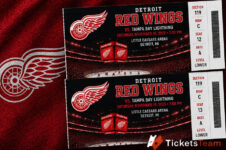
Detroit Red Wings Tickets
Detroit doesn’t just watch hockey. It observes it the way other cities observe church holidays — with ritual, with grudges going back decades, and with an octopus tossed onto the ice for reasons that made sense in 1952 and somehow still make sense today. The Red Wings are Original Six royalty, eleven Stanley Cups deep, and the franchise that turned “Hockeytown” from a marketing slogan into a genuinely accurate zip code description. If you’re trying to get into Little Caesars Arena for a game, you’re stepping into that lineage, and the ticket-buying process deserves the same seriousness Detroit fans bring to arguing about the 1997 roster.
This guide walks through where the team plays, how the ticketing system actually works in 2026, what you’ll pay, where to sit, how to get there, and which sources are worth trusting when the arena’s own inventory runs dry. No fluff, no filler — just the practical mechanics of turning “I want to go to a Wings game” into a seat with your name on it.
Where the Red Wings Actually Play
The Detroit Red Wings play their home games at Little Caesars Arena, located at 2645 Woodward Avenue, Detroit, Michigan 48201. The arena sits in Midtown Detroit, anchoring The District Detroit — a 50-block entertainment corridor built specifically to give the Red Wings and the Detroit Pistons a shared, modern home after decades at the much-loved but aging Joe Louis Arena on the riverfront.
Little Caesars Arena opened in September 2017, cost roughly $863 million to build, and holds about 19,515 fans for hockey. It was designed with a “deconstructed” layout — the box office, team store, and several restaurants sit outside the bowl itself but under the same connected glass roof, so the building functions more like a small entertainment district than a traditional standalone arena.
For anyone driving in with a physical destination in mind, that Woodward Avenue address is the one to plug into your GPS. The building sits just across I-75 from downtown Detroit proper, within easy reach of Ford Field and Comerica Park, which makes a Red Wings game an easy add-on to a broader Detroit sports weekend.
Box Office Hours and Contact Info
If you’d rather handle things in person or by phone instead of online, the Little Caesars Arena box office keeps these hours:
- Labor Day through May: Tuesday–Saturday, 10:00 a.m.–5:30 p.m.
- June through Labor Day: Monday–Friday, 10:00 a.m.–5:30 p.m.
- On event days: the box office opens at 10:30 a.m. and stays open through 30 minutes after the event ends.
For ticketing questions specific to the Red Wings, group sales can be reached at 313-471-7575. General guest experience questions go through 313presents.com/GetInTouch, and during live events, non-emergency issues can be texted to LCAHELP at 313-513-4357.
How Red Wings Ticketing Actually Works
The 2026-27 season is the franchise’s 101st in the NHL, and the team has branded the campaign “Hockeytown 101.” The Red Wings open the season at home against the New York Rangers on Friday, October 2, at 6:30 p.m., and the early schedule is unusually generous to Detroit fans — seven of the first eight games are played inside Little Caesars Arena, including a four-game season-opening homestand against the Rangers, Winnipeg Jets, Ottawa Senators, and Seattle Kraken before the team hits the road for the first time.
That homestand matters for ticket buyers because early-season inventory tends to be deepest and least chaotic. Once the Red Wings start playing meaningful divisional games against Atlantic Division rivals — and this year’s schedule includes 28 of those — prices tighten and good seats disappear faster.
Single-Game Tickets Through the Team and Ticketmaster
Single-game tickets for the 2026-27 season went on sale August 4, with presale access offered earlier to fans who signed up through the team’s priority list. The two primary official channels are:
- NHL.com/redwings/tickets — the team’s own ticketing hub, which routes to presale sign-ups, single-game sales, and membership information.
- Ticketmaster — the Detroit Red Wings’ official ticket marketplace, used for both primary single-game sales and team-verified resale.
Because Ticketmaster is the club’s designated marketplace, tickets purchased there are treated as verified by the team and arena, which matters for mobile entry, digital wallet transfers, and any promotional giveaway nights tied to specific gates or portals.
Season Tickets and Winged Wheel Nation
Full-season membership runs through a program called Winged Wheel Nation, presented by Ticketmaster. It’s pitched less as a simple ticket product and more as a fan-loyalty tier, with member events, presale windows for playoff and premium games, and account-management perks through the season. If you’re the type of fan who wants the same seat for all 41 home dates and the ability to resell or transfer individual games you can’t attend, this is the tier built for you.
10-Game Plans
For fans who love the team but can’t commit to a full 41-game season, the Red Wings offer two partial plans, both presented by Coca-Cola:
- The Original Six Plan — built around marquee matchups against the NHL’s oldest franchises (Rangers, Bruins, Canadiens, Maple Leafs, Blackhawks).
- The Hockeytown Plan — a broader mix of ten games across the schedule.
Both are available through DetroitRedWings.com/10GamePlans, and they’re worth a look for anyone who wants locked-in seats and presale access without the full financial commitment of a season plan.
The Secondary Market — Where to Buy When the Team’s Inventory Is Gone
Even in a rebuild year, big games sell through primary channels fast — rivalry nights, Original Six matchups, and theme games especially. When that happens, the resale market is where most fans end up. A few platforms dominate that space, and each has a slightly different personality.
- StubHub — one of the oldest resale marketplaces, backed by a FanProtect guarantee that promises a refund or comparable replacement if something goes wrong with a listing.
- SeatGeek — known for its “Deal Score” system, which ranks listings by value so buyers aren’t just guessing whether a price is fair.
- Vivid Seats — strong for suite and premium listings, with interactive seating maps that make it easier to compare sightlines before buying.
- 313 Presents — the arena’s own venue and event management arm, useful for verifying official event details, accessibility information, and box office policy directly from the source.
A practical note on the secondary market: prices move constantly based on the opponent, day of week, and how the Red Wings are playing that month. A Tuesday night game against a struggling Metropolitan Division team in November will price very differently than a Saturday matchup against the Maple Leafs or Bruins in February. If you’re flexible on which game you attend, that flexibility is worth real money.
What Red Wings Tickets Actually Cost
Pricing at Little Caesars Arena depends on the matchup, the day of the week, the seat location, and how far in advance you buy. As a general baseline, the average ticket for a Red Wings game runs somewhere between $125 and $175, though that range swings considerably depending on demand.
A few patterns worth knowing before you shop:
- Preseason games are almost always the cheapest way to see the team live, sometimes available for a fraction of the regular-season average — useful if you mainly want the in-arena experience without the price tag of a meaningful game.
- Weeknight games against non-rival opponents tend to sit at or below the average, especially for upper-bowl seats.
- Weekend games and Original Six matchups (Maple Leafs, Bruins, Canadiens, Rangers, Blackhawks) push prices well above average, particularly in lower-bowl sections near center ice.
- Theme nights and giveaway games — bobblehead nights, Star Wars Night, Heritage Games — also tend to run hotter than a standard matchup, partly because of the promotional item and partly because they draw families and collectors who don’t typically attend as many games.
If budget is the deciding factor, cross-shopping the official Ticketmaster marketplace against StubHub, SeatGeek, and Vivid Seats for the same game is worth the extra five minutes. Fees, seat views, and even face-value pricing can differ meaningfully across platforms for what is technically the same section.
Timing Your Purchase
Ticket pricing for professional sports is dynamic, meaning it moves in something close to real time based on demand, not a fixed printed price. A few timing principles hold up well across most NHL markets, Detroit included:
Buy early for premium games. Rivalry nights, playoff-adjacent late-season matchups, and marquee visiting stars tend to only get more expensive as the date approaches. If you know you want to see the Maple Leafs or Bruins, don’t wait.
Wait for value on lower-demand games. Midweek games against non-glamour opponents sometimes see prices soften in the final 48 hours as sellers try to move inventory rather than eat a loss on an unsold ticket.
Watch the presale windows. Fans who sign up for the team’s priority presale list get access before the general public — worth doing even if you’re not sure yet which specific game you want, since it costs nothing to register and simply opens the door earlier.
Check theme night calendars before you buy. The Red Wings typically publish their promotional schedule — bobblehead giveaways, Halloween and Thanksgiving Eve games, Star Wars Night, Heritage Games, and Kids Days — shortly after the regular schedule drops. If a giveaway matters to you, buy that specific date rather than a similar one nearby, since giveaways are usually tied to the first several thousand fans through the gate.
Where to Sit — A Seating Primer
Little Caesars Arena’s hockey configuration is fairly standard for a modern NHL bowl, but a few sections have real personality worth knowing about before you buy blind.
Lower bowl (100 level): Closest to the ice, best for feeling the speed of the game and seeing the physical play along the boards. Center-ice sections here are the most expensive real estate in the building and sell out first for big games.
Club level: Includes access to lounges like the Jack Daniel’s Club No. 7, with in-seat or nearby food and beverage service. A strong option for fans who want comfort as much as sightlines.
Upper bowl (300 level): The most affordable way to see a full view of the ice. Steeper sightlines, but a legitimate view of the entire rink, and often the best value per dollar for casual fans.
Suites: Available for groups and corporate outings, bookable through the arena directly or through premium listings on Vivid Seats, with private seating, dedicated service, and — depending on the suite — a separate entrance.
One practical tip specific to this building: because the box office, shops, and restaurants sit outside the bowl under a shared roof, arriving 30–45 minutes early isn’t just about beating the puck drop — it’s genuinely worth the extra time to walk the concourse, see the Gordie Howe, Ted Lindsay, and Alex Delvecchio statues, and take in the Hockeytown memorabilia before finding your seat.
Getting to Little Caesars Arena
The arena is built with four primary named entrances, each tied to a specific street corner, which makes it easy to coordinate a meeting point with anyone you’re attending with:
- Priority Entry (NW) — located on Sproat Street, just west of Woodward Avenue.
- Chevrolet Entry (NE) — located at Woodward Avenue and Sproat Street.
- Comerica Entry (SE) — located at Woodward Avenue and Henry Street.
- Meijer Entry (SW) — on the southwest corner of the arena footprint.
Parking
The District Detroit includes more than 30 parking structures surrounding the arena, and accessible parking is available across all of them on a first-come, first-served basis. The garages generally considered closest to the arena for accessible parking are the Trinity Health Garage, the United Wholesale Mortgage Garage, and the Temple West Garage, with an accessible drop-off and pick-up area along the West Fisher Service Drive, near Park Street and the Henry West Garage.
Because downtown Detroit’s grid is walkable and dense, plenty of fans also park a few blocks out in cheaper surface lots and walk in — a reasonable trade if you don’t mind a short walk and want to avoid the premium pricing directly adjacent to the building on high-demand nights.
Public Transit
For fans avoiding the parking scramble entirely, the arena is accessible via DDOT Route 4 and SMART Routes 461 and 462, both of which stop near Sproat Street and Adelaide Street, a short walk from the arena’s main entrances. The QLINE streetcar, which runs along Woodward Avenue through Midtown and downtown, is another option worth checking for anyone staying in a downtown hotel.
Accessibility
Little Caesars Arena has invested specifically in accessible fan experience. Every fixed concession stand in the building is wheelchair accessible, with accessible counters available throughout the concourses, including club areas and adjacent restaurants. Accessible drinking fountains are located on the Street Level Concourse at Portals 1, 4, 10, and 13, and on the Upper Level Concourse at Portals 21, 29, and 62.
The arena also operates a sensory room, built in partnership with KultureCity, located on the upper concourse across from Portal 66, next to First Aid. Sensory items — noise-reducing headphones, fidget tools, and similar accommodations — are available free of charge at Guest Service Offices at Portals 10, 20, and 67, distributed first-come, first-served after a brief waiver and ID hold.
Fans who run into ticketing issues related to accessibility or seating accommodations are directed to speak with a Guest Relations staff member on-site rather than trying to resolve it purely through a resale platform’s customer service line, since the arena controls the physical accommodations directly.
A Few Honest Tips From Watching This Market
A handful of things worth knowing that don’t fit neatly into a category above:
Screenshot everything. Whether you buy through Ticketmaster, StubHub, SeatGeek, or Vivid Seats, save a copy of your confirmation and seat location before the transfer completes. Digital ticket platforms occasionally have transfer hiccups, and having your original confirmation makes resolving any issue faster.
Mobile entry is standard now. Little Caesars Arena, like most modern NHL buildings, has moved almost entirely to mobile ticketing. Make sure whichever app you’re using is downloaded and logged in before you leave for the arena, since parking-lot Wi-Fi and cell service near a packed venue can be unreliable.
Don’t sleep on preseason. If your main goal is simply experiencing an NHL game inside Little Caesars Arena without spending real-season money, preseason matchups — including road preseason games against Columbus and Pittsburgh this year, plus home preseason dates — are consistently the most affordable entry point.
Check both primary and secondary before assuming a game is sold out. A “sold out” primary listing on Ticketmaster doesn’t mean tickets don’t exist — it usually means the remaining inventory has moved to individual sellers on the resale market. Cross-check before giving up on a specific date.
Bundle it with the neighborhood. The District Detroit surrounding the arena has restaurants and bars built specifically around game nights, so treating a Red Wings game as an evening rather than just an event tends to be worth the extra planning.
Frequently Asked Questions
Where do the Detroit Red Wings play their home games? Little Caesars Arena, at 2645 Woodward Avenue, Detroit, Michigan 48201, in the Midtown/District Detroit area.
When do single-game tickets go on sale for the season? For 2026-27, single-game tickets became available August 4, with presale access offered earlier to fans registered on the team’s priority list through the official ticketing hub.
What’s the official place to buy Red Wings tickets? The team’s own ticketing page at NHL.com/redwings/tickets and the club’s designated marketplace on Ticketmaster are both considered official, verified sources.
Is it safe to buy Red Wings tickets on the resale market? Reputable platforms like StubHub, SeatGeek, and Vivid Seats all offer buyer guarantees that cover canceled events or invalid tickets, which makes them reasonably safe when the primary market is sold out.
How much do Red Wings tickets typically cost? Average pricing runs roughly $125 to $175 per ticket, with preseason games well below that range and marquee rivalry or theme-night games well above it.
Are there cheaper ways to see a game live? Preseason matchups and upper-bowl seats for midweek, non-rival games are consistently the most affordable ways to attend in person.
Can I get to the arena without driving? Yes — DDOT Route 4, SMART Routes 461 and 462, and the Woodward Avenue QLINE streetcar all serve the area immediately around Little Caesars Arena.
Does the arena offer accessible seating and accommodations? Yes, including accessible parking across all District Detroit garages, wheelchair-accessible concessions and drinking fountains throughout the concourses, and a dedicated sensory room operated in partnership with KultureCity.
Buying a Red Wings ticket isn’t complicated, but doing it well — getting a fair price, a seat that actually suits how you want to watch the game, and a smooth entry into the building — takes a little bit of homework. Start with the official channels, know your backup options on the resale market, watch the calendar for the games that matter to you, and treat the address on Woodward Avenue as the start of the evening, not just the destination. Hockeytown has earned its nickname one generation of fans at a time, and getting through the doors of Little Caesars Arena is still, more than a century into this franchise’s history, one of the better ways to spend a cold Michigan night.