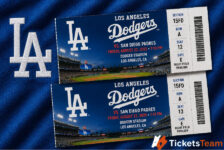
Los Angeles Dodgers Tickets
There’s a particular kind of anticipation that comes with holding a Dodgers ticket in your hand — or, more likely these days, glowing on your phone screen. Los Angeles is a city that runs on spectacle, but Dodger Stadium has always been something different: a 64-year-old bowl carved into the hills above downtown, filled every summer night with 56,000 people who came from every corner of the city to watch the same nine innings unfold. Buying a ticket to see the defending back-to-back World Series champions play isn’t just a transaction. It’s a small act of joining something. The trouble is that getting one of those tickets in 2026 has become its own kind of sport, with a maze of resale markets, dynamic pricing, and a stadium that — as of this year — technically has two names.
This guide exists to cut through that maze. Below, you’ll find the actual address, the real phone numbers, honest pricing ranges pulled from the market as it stands today, and a clear-eyed comparison of where to buy, when to buy, and how to avoid overpaying for a seat that a savvier fan two rows over got for half the price.
Where Dodger Stadium Actually Is
Let’s start with the basics, because you’d be surprised how many people show up at the wrong gate or plug the wrong address into their GPS during rush hour on the 110.
Dodger Stadium sits at 1000 Vin Scully Avenue, Los Angeles, CA 90012, tucked into Chavez Ravine just north of downtown. If you’re mailing anything to the organization — a season ticket application, a group sales inquiry — that’s the address to use. The main switchboard is 866-DODGERS (866-363-4377), which routes to different extensions depending on what you need: new season ticket sales, membership services, premium sales, group sales, stadium information, fan services, and the box office each have their own line off that main number.
One quirk worth knowing before you arrive: as of March 2026, the playing field itself carries a second name. The Dodgers partnered with the Japanese retail brand Uniqlo for field naming rights, and the field is now officially called “Uniqlo Field at Dodger Stadium.” The stadium’s name and address haven’t changed — you’ll still find it on Google Maps and every freeway sign as Dodger Stadium — but broadcasters are contractually obligated to say the full name, and you’ll see new signage around the concourse. Don’t let it throw you when you hear an announcer say it during the broadcast; it’s the same ballpark your parents took you to.
If you’re buying tickets in person or need to pick up a will-call order, the primary box office is located in Parking Lot P, open Monday through Saturday starting at 9 a.m. It’s worth calling ahead during high-demand series, since lines can stretch well before gates open.
Buying Direct: The Official Route
If you want the cleanest path to a ticket — no resale markup, no guesswork about seat location — start with the team itself. The Dodgers’ official ticketing operation runs through Dodgers.com and the MLB.com Dodgers tickets page, with Ticketmaster serving as the club’s authorized partner for both single-game and group purchases. You can browse the full 2026 schedule, interactive seating chart, and real-time pricing directly on the Ticketmaster Dodger Stadium venue page.
Buying direct matters most for two kinds of fans: those who want mobile-transfer tickets guaranteed to scan cleanly at the gate, and those chasing a specific promotional giveaway night — bobblehead nights, jersey nights, and themed events sell out fast and are far more reliably sourced from the team than from a reseller who may or may not have the actual giveaway item bundled in.
Season tickets, partial-season “mini plans,” and group outings all route through the same 866-DODGERS switchboard, just different extensions. If you’re organizing a group of twenty or more — a company outing, a Little League team, a birthday party — the group sales line offers tiered pricing that individual buyers never see advertised.
What You’re Actually Paying For: Dodger Stadium’s Seating Levels
Dodger Stadium’s design is a relic of a different architectural era — five stacked levels wrapped around the field, each with its own personality and price point. Understanding them is the difference between a $60 outfield seat with a hot dog view and a $2,000 evening you didn’t mean to book.
Dugout Club and Field Level
These are the seats closest to the action, wrapping around the infield at field level. Field-level seats start around $130 for a regular-season game and can climb as high as $2,000 for the most in-demand matchups with the full VIP experience included. Dugout seats sit even closer to the players and command the highest prices in the building on any given night.
Loge and Club Level
The second deck offers a nice middle ground — closer than the upper bowl, cheaper than field level, with better sightlines than you’d expect for the price. This tier tends to move the most inventory on the secondary market because it hits the sweet spot between cost and view.
Reserve Level
Reserve tickets are generally the cheapest full-view seats in the park, offering a solid vantage point from the upper level, with prices starting just north of $90 and ranging up to roughly $1,000 for premium single games. This is where most families and budget-conscious fans end up sitting, and honestly, on a clear night, the view of the San Gabriel Mountains from up there is one of the best backdrops in American sports.
Pavilion (Left and Right Field)
The pavilion sections are among the most immersive spots in the ballpark and a longtime favorite of die-hard fans, with a lower price ceiling than the rest of the stadium — tickets typically start just over $100 and peak around $739. This is prime real estate for catching batting practice home runs and soaking up the loudest, most engaged crowd energy in the building.
Top Deck
This is the true budget tier. The cheapest section in the ballpark is typically the Top Deck, which offers a more distant view of the field but still delivers a genuine big-league atmosphere at a fraction of the cost of anything closer. If your goal is simply to say you were there and watch a Dodgers win under the lights, this is where your dollar stretches the furthest.
So, How Much Does a Dodgers Ticket Actually Cost?
This is the question everyone actually wants answered, and the honest response is: it depends enormously on which source you check and which night you’re asking about.
Los Angeles Dodgers tickets can range anywhere from around $10 to well over $5,000 depending on seat location, opponent, and date, with the average ticket price sitting near $131 across all home games. Other trackers report different averages depending on the sampling window — a Vivid Seats report ahead of last season put the average Dodgers ticket at $181, more than $40 higher than any other team in baseball — which tells you the Dodgers have consistently been the most expensive ticket in the sport, champion status notwithstanding. Opening Day tickets alone started at $183 in 2026, with several games in the season’s first month also opening in triple digits.
The takeaway: don’t anchor your expectations to a single number you saw in a headline. Check live pricing close to your intended date, because Dodgers tickets move with the same real-time demand curve as airline seats.
The Secondary Market: StubHub, SeatGeek, Vivid Seats, and TickPick
Once you move past the official channel, you’re in resale territory — and for the Dodgers, that market is enormous and genuinely competitive, which works in a buyer’s favor if you shop smart.
SeatGeek aggregates listings across the secondary market and is often where you’ll find the deepest inventory for a specific game, with prices for Dodgers tickets currently starting as low as $65 depending on the matchup.
Vivid Seats runs its own buyer guarantee and tends to have some of the widest price spreads in the market — tickets currently starting around $12 with an average listed price near $58, though that average shifts constantly with the schedule and opponent. Vivid Seats also publishes useful context alongside listings, like nearby spots worth checking out before the game, including Elysian Park, Chinatown Central Plaza, Philippe The Original, Echo Park Lake, El Compadre, and Masa of Echo Park.
TickPick markets itself specifically on eliminating service fees, meaning the price displayed at checkout is the price you actually pay, with no added charges tacked on at the final step. For fans who’ve been burned before by a ticket that jumped 30% between the search results page and the checkout page, that’s a meaningful difference.
StubHub remains one of the largest general resale marketplaces in sports and is worth cross-checking against the others, particularly for high-demand series against rivals or during the postseason, when inventory shifts by the hour.
Barry’s Ticket Service takes a different approach entirely — a boutique, no-fee brokerage with actual human agents rather than an algorithm. The service has built a track record with more than 22,500 verified customers, and for fans who want someone to help hunt down four seats together for a family outing, that personal touch can be worth the trade-off against the convenience of a fully automated platform.
The smartest approach isn’t loyalty to one platform — it’s opening two or three tabs for the same game and comparing get-in prices before you commit. Fees, seat views, and delivery methods vary enough between sites that the “cheapest” listing on one platform is sometimes not the cheapest ticket overall once everything is accounted for.
Timing Is Everything: When to Buy
Dodgers ticket pricing behaves less like a fixed menu and more like a stock chart, and there are real patterns you can use to your advantage.
Month matters. September is consistently the cheapest month to catch a Dodgers game, largely because school is back in session, summer tourism has thinned out, and unless the team is fighting for playoff seeding, demand cools considerably compared to the peak of June and July.
Day of the week matters more than people realize. Weekday games — particularly Tuesday through Thursday — consistently price lower than weekend dates, offering the best combination of availability and value. A Wednesday afternoon game against a non-rival opponent can run a fraction of the cost of the exact same seat on a Saturday night.
Opponent matters enormously. Matchups against teams outside the traditional rivalries price noticeably lower — recent examples included Guardians games starting around $72 and Marlins matchups beginning near $77, while anything involving the Giants, Padres, Yankees, or Angels will run considerably higher across every seating tier.
Playoffs are a different universe entirely. When the Dodgers reach the World Series, pricing detaches from anything resembling regular-season logic. During the 2024 World Series against the Yankees, the cheapest available ticket for Game 1 at Dodger Stadium ran north of $1,000, and Game 2 jumped a couple hundred dollars higher still. The average ticket price across that series reportedly reached $1,368, more than double the average price of the previous year’s Fall Classic. If a deep playoff run is even remotely on the table for a team you’re planning around, buy your seats the moment they go on sale — prices for elimination games in particular only move in one direction.
The Cheapest Ways to Actually See a Game
Not everyone needs field level. If your goal is simply to be inside the stadium on a summer night, here’s how frugal fans do it:
- Target Top Deck sections on weekday, non-rivalry games. This combination consistently produces the lowest legitimate get-in prices of the season.
- Watch for free giveaway Tuesdays, when select games include free promotional items designed by local artists, adding value without adding cost to the ticket itself.
- Buy close to first pitch, not months in advance, for games that aren’t high-demand. Sellers with unsold inventory often drop prices in the final 24 to 48 hours rather than eat the loss entirely — though this strategy is risky for marquee matchups, where prices tend to rise as game time approaches instead.
- Consider a mini plan if you know you’ll attend multiple games in a season; per-game pricing on partial season packages is often meaningfully lower than buying the same games individually.
Parking, Getting In, and the Costs Nobody Warns You About
The ticket is rarely the last thing you pay for. Dodger Stadium sits on a hillside with its own sprawling network of parking lots, and choosing the right one changes both your wallet and your walk.
General parking lots surround the stadium in a horseshoe, with Lexus Preferred Parking available closer to the gates for a premium. The team also runs the Dodger Stadium Express, a shuttle service connecting Union Station and other points around the city directly to the ballpark, which is worth considering if you’d rather skip the post-game exit traffic entirely — anyone who’s sat in the Lot P gridlock after a walk-off win understands why. If mobility assistance is needed once you’ve parked, the Dodgers operate a courtesy shuttle between the lots and the entry gates, which can be requested by calling the Dodger Hotline at (323) 224-2611.
Budget roughly $30 to $50 for parking depending on the lot and demand, plus concessions once inside — Dodger Stadium is famous for its Dodger Dog, but a full concession run for a family of four can easily rival the cost of a Reserve-level ticket.
For Fans Who Want to Go Deep: Season Tickets and Memberships
For fans who’ve decided casual attendance isn’t enough, the Dodgers offer a full ladder of commitment levels: full season plans, partial “mini plans” built around specific stretches of the schedule, and premium memberships with lounge access and dedicated concierge service. Season ticket account services, membership questions, and premium sales each route through their own extension off the main 866-363-4377 line, and current members can reach account services directly through memberservices@ladodgers.com. Group ticket sales have their own dedicated inbox at grouptix@ladodgers.com, which is the fastest way to get a real quote for a large party rather than guessing at bulk pricing on a resale site.
A Few Honest Tips From the Cheap Seats and the Good Ones
After enough seasons watching this team from every level of the stadium, a few lessons hold up consistently:
Buy your parking pass in advance whenever a site offers it. Showing up without one on a sellout night can add a genuinely frustrating half hour to your evening before you’ve even found a seat.
Cross-reference at least two resale platforms before buying anything above face value. The spread between sites for the identical seat, on the identical night, is often larger than people expect.
Don’t buy from anyone standing outside the stadium gates waving physical tickets. It’s an old habit that still happens on big nights, and it carries real risk of counterfeit or duplicate tickets that won’t scan.
If accessibility accommodations are needed, accessible seating can be purchased either by calling the Dodgers’ ticket office at 866-DODGERS or online at dodgers.com — it’s a separate process from general seating and worth arranging ahead of time rather than at the gate.
And if you’re chasing a specific bobblehead or giveaway night, buy from the team directly. Resale tickets for those games sometimes don’t include the promotional item, since giveaways are typically distributed to the first however-many-thousand fans through the gates, not tied to the seat itself.
Frequently Asked Questions
How much do Dodgers tickets cost? Prices range from roughly $10 on the low end to several thousand dollars for premium seats against top rivals, with the average sitting somewhere between $58 and $181 depending on which platform and time of season you’re checking. Weekday games against non-rival opponents sit at the low end; weekend rivalry games and playoff dates sit at the high end.
Where is Dodger Stadium located? 1000 Vin Scully Avenue, Los Angeles, CA 90012.
Is Dodger Stadium the same as Uniqlo Field? Yes. The stadium is still officially named Dodger Stadium; the playing field itself was renamed Uniqlo Field at Dodger Stadium in March 2026 as part of a sponsorship deal, and fans will hear both names used interchangeably.
What’s the cheapest month to buy Dodgers tickets? September, generally, once the summer tourist crowds thin and demand cools outside of playoff-race intensity.
What’s the cheapest seating section? Top Deck sections typically offer the lowest prices in the ballpark.
Where should I buy tickets — official site or resale? The official Dodgers and Ticketmaster channels are the safest bet for guaranteed authenticity and giveaway nights; resale platforms like SeatGeek, Vivid Seats, TickPick, and StubHub frequently beat face value on less in-demand games, so it pays to check both before buying.
Can I get accessible seating? Yes, by calling 866-DODGERS or arranging it directly through dodgers.com.
Getting into Dodger Stadium in 2026 takes a little more homework than it used to, thanks to a resale market that never sleeps and a demand curve shaped by back-to-back championships. But the fundamentals haven’t changed: know the address, know your seating level, compare a couple of platforms before you buy, and time your purchase around the calendar patterns that actually move prices. Do that, and you’ll spend less time overpaying and more time watching baseball under the lights at Chavez Ravine, exactly where a Dodgers ticket is supposed to take you.