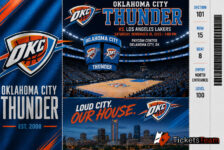
Oklahoma City Thunder Tickets
Oklahoma City is not a big city that happens to have a basketball team. It is a basketball city, full stop, and the Thunder are the reason why. Since the franchise’s first title run in 2025, a ticket to Paycom Center has stopped being a casual purchase and started being something closer to a small negotiation — with the calendar, with the resale market, and with your own patience. This guide walks through where the games are played, how the ticket-buying system actually works, what you should expect to pay, and how to avoid the mistakes that turn a fun night out into an expensive lesson.
Whether you’re a local trying to catch a Tuesday game against the Spurs or a visitor building a trip around a marquee matchup, the goal here is the same: get you into the building for a fair price, in a seat you’ll actually enjoy.
Where the Thunder Play: Paycom Center
Every Thunder home game is played at Paycom Center, located at 100 W Reno Ave, Oklahoma City, OK 73102, on the southern edge of downtown, a short walk from the Bricktown entertainment district. The arena has gone by a few names over the years — Ford Center, then Chesapeake Energy Arena — before Paycom took over the naming rights. Locals sometimes still call it “the Peake” out of habit, so don’t be thrown off if you hear that.
The building’s general information line is 405-602-8700, and the dedicated Thunder Ticket Office can be reached at 405-208-HOOP (4667). The box office sits just off West Reno, between the two main entrances on the arena’s north side. On game days it typically opens at noon Monday through Saturday, or four hours before tip-off for Sunday games, though hours can shift for special events, so a quick call ahead is worth it if you’re planning to buy in person.
Paycom Center holds a little over 18,000 fans for basketball, and the building has a well-earned reputation as one of the loudest in the NBA. The lower bowl sits close to the floor, the upper deck is steep enough to feel like it’s leaning over the court, and the crowd — largely because Oklahoma City has no competing pro sports team pulling attention elsewhere — shows up with an intensity that visiting players regularly mention after games.
Buying Straight From the Team and the League
The most reliable starting point for any Thunder ticket search is the official route. The team’s primary ticketing partner is Ticketmaster, and searching “Oklahoma City Thunder” through their platform will pull every officially released game, including single-game tickets once they go on sale and any remaining team-held inventory closer to tip-off.
The NBA also runs its own verified resale marketplace, the NBA Ticket Exchange, which is worth checking because it aggregates listings from season-ticket holders who are reselling through a league-monitored system rather than a third-party site. Because these tickets pass through the same verification pipeline as primary tickets, the risk of ending up with a duplicated or fraudulent barcode drops significantly.
For anyone who wants the full picture of the season before buying anything, the schedule and the venue’s own event calendar live at Paycom Center’s official site. It’s a useful place to sanity-check dates, since national broadcast schedules occasionally shift start times after tickets have already gone on sale.
A note on dynamic pricing: like most NBA teams, the Thunder’s official partners use pricing that moves with demand. A get-in price posted on a Tuesday can look different by Friday, especially once an opponent’s star player is confirmed to be playing. If you see a price you’re comfortable with on a game you actually want to attend, there’s rarely a strong argument for waiting.
The Resale Marketplace: Where Most Fans Actually Buy
In practice, a large share of Thunder tickets change hands on the secondary market, and several platforms specialize in exactly that.
SeatGeek has become one of the more popular options for OKC games, largely because of its “deal score” feature, which flags listings that are priced below what comparable seats have historically sold for. It’s genuinely useful for spotting a good seat that’s been underpriced by a seller who just wants to move it.
StubHub is the longest-running name in the resale space and tends to carry deep inventory for popular games, including the marquee matchups against teams like the Warriors or a Kevin Durant-led opponent, both of which reliably drive up demand in Oklahoma City.
Vivid Seats rounds out the major three, and its rewards program is worth a look if you attend more than a handful of games a season — the points add up faster than most people expect.
AXS occasionally handles specific Paycom Center events directly and is worth checking for non-NBA events at the arena, though for Thunder games specifically it plays a smaller role than the other three.
A practical habit: open two or three of these platforms in separate tabs before buying anything. Prices for the same physical seat can differ by ten or twenty dollars between sites purely because of how each platform structures its service fees, and those fees are usually only revealed at checkout rather than on the initial listing.
What a Ticket Actually Costs
Pricing swings hard depending on the opponent, the day of the week, and how deep into the season you are. Based on current listings across the major marketplaces, here’s a realistic range heading into the 2026-27 season:
- Weeknight games against lower-profile opponents: upper-level seats can be found in the $30–$50 range, occasionally dipping into the $20s for early-season or back-to-back road-heavy stretches when demand softens.
- Mid-tier matchups and NBA Cup games: expect $45–$90 for a reasonable seat, with lower-bowl options climbing well past that.
- Marquee opponents — teams with a superstar draw, a playoff-rematch storyline, or a nostalgic connection to the franchise — regularly push get-in prices past $100, with courtside and premium club seats running into four figures.
- Floor seats and premium clubs, generally sold through the team directly rather than resale, can range from several hundred dollars to well over a thousand depending on the night.
A few dollars saved rarely comes from luck; it comes from knowing which games are actually in demand and buying the rest early, before dynamic pricing catches up to interest.
Timing the Purchase
If there’s one lesson worth taking from years of NBA ticket-buying, it’s that timing matters more than persistence.
Season tickets and group sales go on sale first, usually in the summer, which is also when the single-game schedule is released. Buying the moment single-game tickets drop tends to lock in the lowest official price for games that will only get more expensive as the season approaches — particularly for playoff-implication games late in the year or nationally televised matchups.
The two or three weeks before a specific game is when resale prices are most volatile. If an opposing star gets ruled out with an injury, prices for that game can drop noticeably within hours. If a team is on a hot streak, the opposite happens.
Day-of-game purchases can occasionally work in a buyer’s favor for lower-demand matchups, as sellers holding unsold inventory sometimes cut prices in the final hours rather than eat the loss entirely. This is a riskier strategy for popular games, where prices tend to rise, not fall, as tip-off approaches.
Holiday and weekend games — Christmas week, MLK weekend, and Saturday night slots — carry a built-in premium regardless of opponent, simply because more people are free to attend.
A Short Seating Guide
Not every section at Paycom Center delivers the same experience, and a cheaper seat isn’t automatically a worse one.
The lower bowl (100 level) puts you close enough to hear the squeak of sneakers and the bench chatter, and it’s the section most associated with the arena’s reputation for noise. Sideline seats here are the most expensive tickets in the building outside of courtside.
The club level (200s in some configurations) offers a mix of comfort and value, often including access to indoor lounges and shorter concession lines — useful on a cold Oklahoma winter night.
The upper bowl (300 level) is where budget-conscious fans land, and thanks to the arena’s relatively steep and compact design, the sightlines up top are genuinely solid for an NBA venue. Center-court seats in the upper deck are often a better value than side seats one level down.
Corner and baseline seats at any level tend to be cheaper than seats along the sidelines, and for fans who care more about the arena atmosphere than a straight-on view of the action, they’re a smart way to save money without sacrificing much.
Beyond the Arena: Where to Stay and Park
Paycom Center sits in a genuinely walkable part of downtown, which makes planning a night around a game easier than it is in a lot of NBA cities.
For parking, the closest option is the underground garage at the neighboring Prairie Surf Studios, managed by Republic Parking Systems, with entrances on the east side along E.K. Gaylord Boulevard and the west side along N. Robinson Avenue. Beyond that, downtown and Bricktown together offer more than 18,000 parking spaces, including roughly 1,300 metered spots, and the city’s parking authority can be reached at 405-235-PARK for questions about specific garages or event-day restrictions.
For visitors building a trip around a game, the Omni Oklahoma City Hotel, at 100 West Oklahoma City Boulevard, Oklahoma City, OK 73109, sits directly next to the Oklahoma City Convention Center and within an easy walk of both Paycom Center and Scissortail Park — close enough that you can leave the car at the hotel entirely and walk to the arena. It’s one of several downtown hotels within a few blocks of the venue, and its location makes it a common choice for out-of-town fans who want to be in the middle of the pregame Bricktown foot traffic rather than driving in from the suburbs.
Bricktown itself, the converted warehouse district just east of the arena, is where most of the pregame and postgame energy lives — restaurants, bars, and the Bricktown Canal all sit within a ten-minute walk of the box office.
Season Tickets and Group Outings
For fans who know they’ll be at ten or more games a year, season tickets typically work out to a meaningfully lower per-game cost than buying individually, plus perks like priority access to playoff ticket purchases, which becomes relevant fast for a team that’s now expected to contend deep into the postseason most years. The Thunder’s ticket office handles season plans, partial plans, and group sales directly, and the fastest way to start that conversation is through the same 405-208-HOOP (4667) number listed earlier.
Group sales — schools, companies, birthday parties — usually require a minimum headcount but come with block seating and, often, small in-arena perks like a scoreboard shoutout. Worth asking about directly rather than assuming the standard single-game price applies.
Buyer Safety: What to Watch For
The secondary ticket market is mostly legitimate, but a few precautions go a long way.
Stick to platforms with a buyer guarantee. Ticketmaster, SeatGeek, StubHub, and Vivid Seats all offer some form of protection if a ticket turns out to be invalid, which is not something you get from a random social media listing or a stranger outside the arena on game night.
Be wary of screenshots. A legitimate mobile ticket transfers through the app itself, not as a static image. If a seller can only offer a screenshot of a barcode, that barcode may already have been scanned or transferred elsewhere.
Check the seat location twice. Some resale platforms list general sections without confirming row, and “upper level” can mean the front row of the 300s or the very last row under the rafters — worth a quick look at a seating chart before paying.
Buy early for high-demand games rather than trusting a last-minute discount. Games against marquee opponents rarely get cheaper as tip-off nears; they get more expensive, and the “prices might drop” strategy tends to backfire specifically on the nights fans want most.
Frequently Asked Questions
Where is Paycom Center located? Paycom Center is at 100 W Reno Ave, Oklahoma City, OK 73102, on the south edge of downtown near the Bricktown district.
What is the cheapest way to get Thunder tickets? Buying single-game tickets the day they’re released through official channels, or watching resale platforms like SeatGeek for underpriced listings on lower-demand weeknight games, tends to produce the lowest prices.
Is it safe to buy Thunder tickets from resale sites? Established platforms with buyer guarantees — Ticketmaster, SeatGeek, StubHub, Vivid Seats, and the NBA Ticket Exchange — are generally safe. The risk rises sharply with unofficial, unverified sellers.
How much do Thunder tickets typically cost? Depending on the opponent and seat location, prices range from roughly $20–$50 for lower-demand upper-level seats up to several hundred dollars or more for marquee games and premium seating.
Do ticket prices change closer to game day? Yes. Dynamic pricing means prices move with demand, injuries, and win streaks — sometimes dropping for less popular games, but typically rising for high-demand matchups as tip-off approaches.
How do I contact the Thunder ticket office directly? Call 405-208-HOOP (4667), or visit the box office at Paycom Center, located just off West Reno between the two main entrances.
Buying a Thunder ticket in 2026 means buying into a team that’s no longer an underdog story — it’s a contender with a national following, and the ticket market reflects that reality. The good news is that the fundamentals haven’t changed: buy early for the games you actually care about, compare a few platforms before committing, know which seats are worth the premium and which aren’t, and stick to sellers who stand behind what they’re selling. Do that, and the only surprise left on game night will be how loud that building actually gets.