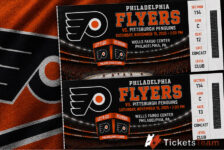
Philadelphia Flyers Tickets
Broad Street has a sound. It’s part foghorn, part air raid siren, and it shows up every time the Philadelphia Flyers score a goal in South Philadelphia. If you’ve never heard it in person, no highlight reel does it justice. Getting into the building for that sound — legally, affordably, and without a headache — is the entire point of this guide.
Buying Philadelphia Flyers tickets isn’t complicated once you know where to look, but the ticketing world has gotten noisier over the last few years. Dynamic pricing, resale marketplaces, verified exchanges, and a venue that changed its name in 2025 have all added friction to what used to be a simple transaction. This piece walks through every part of it: where the team actually plays now, who sells the tickets, what they tend to cost, how to time a purchase, and how to actually get to the arena and find your seat once you’re there.
The Arena Has a New Name — Here’s What You Need to Know
For nearly fifteen years, Flyers fans bought tickets to “the Wells Fargo Center.” That name is gone. In August 2025, the arena’s naming rights shifted to Comcast’s wireless brand, and the building is now officially Xfinity Mobile Arena. Long-time season ticket holders still slip and call it Wells Fargo Center out of habit — even Yelp reviewers do — but every ticket, every parking pass, and every piece of official signage now reads Xfinity Mobile Arena.
The address hasn’t moved an inch, which is the good news for anyone plugging directions into a phone:
Xfinity Mobile Arena 3601 S. Broad Street Philadelphia, PA 19148
The building sits inside the South Philadelphia Sports Complex, sharing a parking footprint with Lincoln Financial Field (home of the Eagles) and Citizens Bank Park (home of the Phillies). If you’ve ever been to a Philadelphia sporting event of any kind, you’ve likely already parked within a few hundred yards of the Flyers’ front door.
A little history for context: the arena opened in 1996 as the CoreStates Center, replacing the old Spectrum across the street. It became the First Union Center in 1998, the Wachovia Center in 2003, the Wells Fargo Center in 2010, and Xfinity Mobile Arena in 2025. Five names, one building, one hockey team that hasn’t left Broad Street since 1967.
Where to Actually Buy Philadelphia Flyers Tickets
There are really two markets here: the official primary market, where tickets first go on sale, and the secondary or resale market, where fans buy and sell tickets they already hold. Both are legitimate. Both have trade-offs.
Official and Primary Sources
The safest starting point is always the team itself. The Flyers sell single-game tickets, partial season plans, and full season memberships directly through their ticketing portal.
- NHL.com/Flyers Tickets — the team’s official ticketing hub, where single-game tickets go live once the schedule drops and preseason on-sale dates are announced.
- Philadelphia Flyers Partial Plans — multi-game packages built around rivalry nights, weekend games, or a specific block of the schedule. Good for fans who want a handful of guaranteed games without committing to all 41 home dates.
- Ticketmaster — the Flyers’ official partner for primary ticket sales and fulfillment. Anything bought through the official Flyers site typically routes through Ticketmaster’s backend, so buying directly on Ticketmaster is functionally the same transaction.
Buying primary has one enormous advantage that gets overlooked constantly: verified authenticity. There is zero risk of a duplicated barcode or a seller who never delivers.
Secondary and Resale Marketplaces
Once tickets are in fans’ hands, they move through resale platforms. This is where most playoff tickets, sold-out rivalry games, and premium seats change hands.
- StubHub — one of the largest resale marketplaces for NHL tickets, with a FanProtect guarantee that covers replacement tickets if something goes wrong.
- SeatGeek — known for its “Deal Score” feature, which rates listings against recent sale prices for the same section, useful for spotting an overpriced seat before you click buy.
- Vivid Seats — frequently runs loyalty rewards and rewards points on hockey tickets, worth checking if you attend multiple games a season.
- Ticket Club — a membership-based resale platform that removes buyer fees in exchange for an annual membership, which can pay for itself after two or three purchases.
A word of caution that applies to every secondary marketplace: verify the seller is using a platform-backed guarantee, screenshot your purchase confirmation, and never wire money or pay through a peer-to-peer app for tickets found on social media or classified sites. If a deal looks unusually good for a Metropolitan Division rivalry game against the Rangers or Penguins, it’s worth a second look before you commit.
Comparing the Marketplaces at a Glance
| Platform | Best For | Notable Feature |
|---|---|---|
| NHL.com/Flyers | Guaranteed authenticity, primary on-sale | Direct team-verified inventory |
| Ticketmaster | Primary purchases and official transfers | Mobile-ticket integration with the arena’s entry system |
| StubHub | Broad resale inventory | FanProtect purchase guarantee |
| SeatGeek | Comparing listing quality | Deal Score pricing analysis |
| Vivid Seats | Frequent attendees | Rewards points on repeat purchases |
| Ticket Club | Avoiding buyer fees | Membership model with no added fees |
How Digital Ticketing Works Now
Nearly every ticket into Xfinity Mobile Arena is a mobile ticket at this point — paper stock and print-at-home PDFs have mostly disappeared from the NHL’s ticketing ecosystem. Tickets purchased through Ticketmaster or the official Flyers portal land in a digital wallet and rotate periodically as a security measure, which is why screenshotting a ticket rarely works for entry anymore; the barcode you screenshot may already be expired by the time you reach the gate.
For resale purchases, the transfer typically happens through the same Ticketmaster account infrastructure the original buyer used, meaning the ticket effectively gets re-issued to the new owner’s account rather than physically changing hands. It’s worth accepting the transfer as soon as it arrives rather than waiting until game day, since transfer links can occasionally expire or run into account-verification snags that are far easier to sort out with a few days of buffer than with fifteen minutes before puck drop.
Understanding the Seating Bowl at Xfinity Mobile Arena
Hockey seating is unforgiving in a way basketball seating isn’t — the glass, the boards, and the sightlines change the experience dramatically depending on where you sit. Xfinity Mobile Arena holds roughly 19,173 fans for hockey, split across a few distinct seating tiers.
Lower Bowl (100 Level)
This is where most of the atmosphere lives. Sections 100 through 121 wrap around the ice at glass level or just above it. Sections directly behind the goals (around 111-112 and 120-121) put you closest to the end-to-end rush and the goal celebrations, while center-ice sections (109-110, 122-123) give the clearest view of neutral-zone play and power plays. These are the most expensive tickets in the building, and for good reason — nothing replicates the sound of the boards rattling six feet from your seat.
Club Level (200 Level)
A mid-tier option that includes access to indoor lounges, upgraded concessions, and a slightly elevated but still intimate view of the ice. This level tends to attract corporate ticket holders and season-plan members, so the crowd energy is a notch quieter than the 100 level, but the sightlines are excellent.
Upper Bowl (300 Level)
The most affordable tickets in the building and, for a lot of die-hard fans, the most fun. The upper bowl at Xfinity Mobile Arena is steep, which actually helps — you get a bird’s-eye view of team structure, breakouts, and defensive zone coverage that’s harder to track from ice level. Sections behind the goals in the 300 level are consistently the cheapest tickets available for any given game.
Standing Room and General Admission
For sellouts and marquee matchups, the arena occasionally releases limited standing-room tickets on the concourse level. These are inexpensive, come with zero guaranteed sightline, and are best suited for fans more interested in the atmosphere than the game action itself.
What Flyers Tickets Actually Cost
Pricing for Philadelphia Flyers tickets is dynamic, meaning it moves with demand — the same way airline seats or hotel rooms do. A Tuesday night game in November against a non-rival Western Conference opponent will price dramatically lower than a Saturday night game against the Pittsburgh Penguins or a rematch against the New York Rangers.
As a general guide:
- Upper-level tickets for lower-demand games often start in the neighborhood of the NHL’s league-wide low end, occasionally dipping into the $25-$40 range on the secondary market for weeknight, non-rival games.
- Lower-bowl tickets for the same type of game typically run considerably higher, often into the low hundreds depending on proximity to the ice.
- Rivalry games — Penguins, Rangers, Devils, and playoff-adjacent matchups — push both tiers up substantially, sometimes doubling or tripling standard pricing.
- Premium and glass seats near the benches or behind the penalty boxes command the highest prices in the building on any given night.
These numbers move constantly, and the single best way to know what a specific game costs right now is to pull up the section on a live marketplace rather than trust any number printed months in advance. Treat every dollar figure in this article as a directional guide, not a quote.
Timing Your Purchase: When to Buy Flyers Tickets
There’s a rhythm to hockey ticket pricing, and fans who understand it save real money.
Buy Early For High-Demand Games
Original Six matchups, the Winter Classic or Stadium Series if the Flyers are involved that season, and any game against a rival coming off a strong season tend to only get more expensive as the date approaches. If you already know you’re going to a specific marquee game, locking in a ticket during the initial on-sale window is usually the cheapest it will ever be.
Wait for Mid-Tier and Low-Demand Games
For a random Tuesday against a team like Columbus or Arizona-turned-Utah, prices frequently soften in the final 48 to 72 hours before puck drop as sellers try to unload inventory rather than eat the loss on unsold seats. Patience pays off here in a way it never does for a Rangers game.
Watch the Standings in January and February
As the trade deadline and playoff push approach, any team fighting for a wild-card spot sees ticket demand climb across the board, regardless of opponent. If the Flyers are in playoff contention heading into the second half of the season, expect pricing on nearly every remaining home date to trend upward.
Getting to Xfinity Mobile Arena: Directions, Parking, and Transit
South Philadelphia’s Sports Complex is genuinely easy to reach from almost anywhere in the region, and the arena’s own directions page breaks it down clearly.
Driving
- From Delaware, Maryland, and the western suburbs via I-476: take I-95 North to the Broad Street/Sports Complex exit.
- From the Pennsylvania Turnpike: take I-76 East toward the sports complex, then the Broad Street exit, turning right (southbound) — the arena will be on your left after crossing Pattison Avenue.
- From Northeast Philadelphia, Bucks County, and North Jersey: take I-95 South to the Broad Street exit.
- From New Jersey via the Walt Whitman Bridge: take the Broad Street exit, turn left onto Broad Street heading southbound.
Eight parking lots surround the venue, ranging from general parking to reserved and valet options. Arriving 90 minutes before puck drop is a reasonable buffer on nights when the 76ers or a concert isn’t also in town; give yourself extra time on doubleheader nights at the complex.
Public Transit
Philadelphia’s SEPTA system makes the arena one of the more transit-friendly venues in American professional sports.
- Broad Street Subway Line (Orange): Take it southbound to NRG Station, which sits directly at the sports complex.
- Regional Rail: Ride into Suburban Station (16th Street and JFK Boulevard), walk through the building to City Hall Station, and catch the Broad Street Line southbound to NRG.
- Bus Routes 4 and 17: Both run to the Broad Street corridor near the complex from Center City and West Philadelphia.
Full route planning is available through SEPTA, and it’s worth checking for service alerts on game day, especially during weather events in the winter months when most of the Flyers’ home schedule takes place.
Rideshare
The arena runs a dedicated Lyft pickup zone in Lot D, on the southeast corner of the building, active during all Xfinity Mobile Arena events — a detail that saves real time compared to hunting for a car in a packed general lot after the final horn.
Game Day Basics Worth Knowing Before You Go
A few practical details separate a smooth first visit from a frustrating one.
- Bag policy: Bags larger than 4.5″ x 6.5″ and smaller than 14″x14″x6″ go through X-ray screening at the Broad Street entrance, the 11th Street entrance, or the Premium Access entrance. Backpacks and large multi-compartment bags are restricted; lockers are available near the 11th Street side for anything that doesn’t clear the policy.
- Payment: The entire building is cashless — concessions, retail, and parking all run on card or mobile payment only.
- Box office hours: The physical box office generally opens only on event days, roughly three hours before puck drop, so don’t plan on walking up for a same-day ticket outside of that window.
- Ticket assistance: For questions on group sales, premium seating, or general ticket issues, the Flyers’ ticket office can be reached directly at (215) 218-PUCK, and group sales specifically at (215) 389-9543.
Group Tickets, Suites, and Premium Experiences
For anyone bringing more than a handful of people — a birthday, a office outing, a youth hockey team — the Flyers run dedicated group packages that bundle tickets with hospitality space, prix-fixe food and beverage service, and in some cases on-ice experiences like standing alongside the team during warmups or taking a shot on Flyers ice after the game. Details and current offerings are listed on the team’s group packages page.
Suites and premium seating sit at the top of the pricing tier and are handled through a separate sales channel from single-game tickets, generally requiring a call to the arena’s premium seating line at (215) 389-9500. These packages typically include private lounge access, in-suite catering, and reserved parking, and they’re sold on a season or partial-season basis more often than as single-game rentals — though single-game suite rentals do occasionally become available depending on inventory.
Flyers Traditions Worth Knowing Before Your First Game
A few things make a Flyers home game distinct from watching one on television.
The team’s home-ice roots run back to the Broad Street Bullies era of the mid-1970s, and the physicality-first identity still shapes the in-arena culture — this is a building where a clean open-ice hit gets as loud a reaction as a goal. “Let’s Go Flyers” is the chant you’ll hear started from the upper bowl and picked up across the arena during any sustained offensive pressure. Kate Smith’s recording of “God Bless America” was a pregame tradition for decades tied to the team’s championship years, though its current status has shifted in recent seasons — worth knowing as context if you hear older fans reference it. And Gritty, the team’s orange, googly-eyed mascot introduced in 2018, has become as recognizable a symbol of the franchise as the orange-and-black jersey itself, regularly working the crowd and the concourse before puck drop.
Frequently Asked Questions
Is the Wells Fargo Center still called that? No. As of August 2025, the arena is officially named Xfinity Mobile Arena. The address, 3601 S. Broad Street, Philadelphia, PA 19148, has not changed.
What is the cheapest way to buy Philadelphia Flyers tickets? Upper-level (300 section) tickets for lower-demand weeknight games against non-rival opponents are consistently the least expensive option, especially when purchased in the final days before the game on a secondary marketplace.
Where is the best place to buy Flyers tickets online? For guaranteed authenticity, the official NHL.com/Flyers tickets page or Ticketmaster is the safest option. For resale, StubHub, SeatGeek, Vivid Seats, and Ticket Club are the most established marketplaces.
How do I get to Xfinity Mobile Arena without driving? Take SEPTA’s Broad Street Subway Line (Orange) southbound to NRG Station, which sits directly at the South Philadelphia Sports Complex.
Can I buy tickets at the arena box office on game day? Yes, but only on event days — the box office typically opens about three hours before puck drop and is not staffed on non-event days.
Are Flyers tickets more expensive during the playoffs? Significantly. Playoff pricing, when the team qualifies, runs well above regular-season pricing across every seating tier, and tickets for elimination or clinching games are typically the most expensive of the postseason run.
What’s the phone number for Flyers ticket support? General ticket questions can be directed to (215) 218-PUCK, and group sales specifically to (215) 389-9543.
Buying Philadelphia Flyers tickets isn’t a mystery once the moving pieces are laid out: know the arena’s current name, decide whether primary or resale fits your situation, understand how pricing moves with the calendar and the standings, and give yourself a clear route to 3601 S. Broad Street. The building has worn five different corporate names since 1996, but what happens inside it hasn’t changed — a loud lower bowl, a louder upper deck, and a chant that starts somewhere in the 300 level and doesn’t stop until the horn sounds. Get your ticket sorted, and the rest of the night takes care of itself.