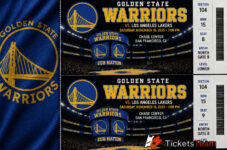
Golden State Warriors Tickets
There’s a particular kind of chaos that hits the Bay Area ticket market every time the Warriors post a marquee opponent on the schedule. Prices jump within the hour. Message boards fill with people asking whether $180 for an upper-bowl corner seat is a fair price or a rookie mistake. And somewhere in San Francisco’s Mission Bay neighborhood, a building shaped like a ship’s hull fills with eighteen thousand people who all had to solve the same puzzle before they got there: how, exactly, does a person actually get Warriors tickets without overpaying, getting scammed, or missing the game entirely?
This guide breaks that puzzle apart piece by piece — where the team plays, who sells the tickets, what they actually cost, and how to buy smart whether you’re chasing a Tuesday night bargain or splurging on a courtside memory.
A Short History Behind the Ticket Prices
To understand why a Warriors ticket costs what it costs, it helps to understand where the franchise has been. The team spent 47 seasons across the bay in Oakland, playing home games at what was then called Oracle Arena, with a brief detour to San Jose’s SAP Center in 1996-97 while that building underwent renovation. Those Oakland years included some brutal stretches — a twelve-season run without a single playoff appearance — followed by one of the more dominant runs in modern NBA history: five consecutive trips to the Finals and three championships in a four-year span.
The 2019 move back across the bay to San Francisco, where the franchise actually began life in 1962 as the San Francisco Warriors before relocating to Oakland in 1971, closed a kind of geographic loop. It also coincided with a $1.4 billion, privately financed arena that raised the ceiling on what a Warriors ticket could reasonably cost, both because the building itself is newer and more amenity-rich than Oracle Arena ever was, and because San Francisco real estate and hospitality pricing runs higher than Oakland’s across the board. A fourth championship followed in 2022, cementing Chase Center’s opening years as anything but a rebuilding period — which is part of why demand for tickets never really had a chance to cool off the way it might have for a team going through a true down cycle.
Why Warriors Tickets Are Some of the Toughest Gets in the NBA
The Warriors have spent the last decade turning regular-season basketball into an event. Four championships between 2015 and 2022, a roster that has featured some of the most efficient shooting in league history, and a fan base that treats a random February game against a lottery team like a playoff atmosphere — all of it adds up to sustained demand that doesn’t really cool off, even in rebuilding years. Add Stephen Curry’s continued star power, Draymond Green’s defensive intensity, and a supporting cast that shifts year to year, and you get a box office that rarely has a truly “quiet” night.
That demand shows up directly in pricing. A midweek game against a non-contender might start in the double digits per ticket. A weekend game against the Lakers, Celtics, or Kings can multiply that by five or more before you even look at premium seating. Understanding that gap — and why it exists — is the first real step toward buying well.
Where the Warriors Play: Chase Center in Mission Bay
Since October 2019, the Warriors have called Chase Center home, located at:
1 Warriors Way, San Francisco, CA 94158
The arena sits in San Francisco’s Mission Bay neighborhood, right on the waterfront, at the corner of 3rd and 16th streets. It holds 18,064 fans for basketball and anchors a larger mixed-use complex known as Thrive City, which includes restaurants, retail, and public plaza space that fills up hours before tip-off. The arena also houses the Warriors’ practice facility, the Oracle Performance Center, and since 2025 it has doubled as the home floor for the WNBA’s Golden State Valkyries.
Getting there is part of the ritual for a lot of season-ticket holders. The T Third Street Muni light rail line stops directly at the arena plaza, and on game nights the SFMTA adds extra “S Shuttle” service between Chinatown-Rose Pak Station and the UCSF/Chase Center stop. Fans coming from the East Bay can take the San Francisco Bay Ferry from Oakland or Alameda, landing at Pier 48.5, about a half-mile walk away. If you’re flying in, San Francisco International Airport connects to the Embarcadero BART station in roughly 30 to 40 minutes, with a short Muni ride from there to the arena.
Official Ways to Buy Warriors Tickets
Before touching a resale marketplace, it’s worth understanding the two channels the team itself controls.
The Warriors’ Own Ticket Office
Season tickets, partial plans, and group sales run directly through the team at warriors.com, where fans can also join waitlists for sold-out membership tiers. This is the channel serious fans use when they want guaranteed access to a full slate of home games, member-only presales, and perks like priority access to playoff ticket windows.
Ticketmaster — the Official Single-Game Marketplace
For single-game tickets, the Warriors’ official partner is Ticketmaster. Every ticket sold through that channel is verified against the team’s own inventory, which matters more than it sounds — mobile entry tickets tied to a verified account are far harder to counterfeit or double-sell than a screenshot passed around a group chat. Ticketmaster typically opens single-game sales in late summer ahead of the coming season, and that first wave is usually the best combination of selection and price before scalpers and bots start scooping up prime inventory.
The Secondary Market: Where the Real Bargains and the Real Risks Live
Once the official inventory is picked over, the resale market takes over — and this is where both the best deals and the worst mistakes tend to happen.
SeatGeek, StubHub, and Vivid Seats are the three biggest general resale marketplaces, each pulling listings from season-ticket holders and brokers who can’t make a given game. They’re useful for two very different reasons. First, if you want a specific seat — say, a certain row behind the Warriors bench — the resale market is often the only place you’ll find it, because those seats belong to individuals, not the team’s general inventory. Second, prices on these platforms fluctuate in real time, which means a game that looked expensive on Monday can drop by 30 percent by Wednesday if demand doesn’t materialize the way brokers expected.
There are also NBA-specialized resellers like TicketSmarter and TicketSales.com, which focus heavily on sports inventory and sometimes surface listings the bigger general marketplaces don’t carry, particularly for premium and VIP packages.
The trade-off with any secondary marketplace is straightforward: you’re generally paying a service fee on top of the seller’s asking price, and you’re trusting the platform’s guarantee rather than the team’s direct verification. Reputable platforms back that trust with 100 percent buyer guarantees — refunds or replacement tickets if something goes wrong — but it’s still worth reading the fine print before checkout, especially for high-dollar purchases.
What Warriors Tickets Actually Cost
Pricing for Warriors games swings harder than almost any other team in the league, and the gap between a cheap night and an expensive one can be enormous.
On the low end, weeknight games against teams outside the playoff picture have shown “get-in” prices in the $30 to $65 range for upper-bowl seats, particularly for early-season or midweek matchups that don’t draw a national TV window. On the high end, marquee games — a Christmas Day matchup, a nationally televised rivalry game, or a visit from a top-tier opponent — have seen average ticket prices climb past $1,000, with premium and courtside packages stretching into the thousands. One recent Christmas Day listing showed average prices above $1,300, with top-end seats priced well beyond $10,000.
A few patterns hold up consistently across a season:
- Day of the week matters enormously. A Tuesday or Wednesday game can cost two to three times less than a Saturday night game against the exact same opponent.
- Opponent matters more than almost anything else. Games against the Lakers, Celtics, Warriors’ old Western Conference rivals, or any team featuring a global superstar routinely command premium pricing regardless of either team’s record.
- National broadcast windows push prices up. A game airing on a national package tends to carry a price premium over an unbroadcast weeknight game, partly because it draws a bigger national buying pool on resale platforms.
- Preseason is the affordability window. Preseason matchups, including road exhibition games, have shown some of the lowest get-in prices of the calendar year — useful for fans who want the in-arena experience without the regular-season markup.
Season Tickets, Partial Plans, and Group Outings
For fans who attend regularly, a full or partial season plan through the team can end up cheaper per game than buying single tickets all season, particularly for lower-bowl locations that rarely show up on the resale market at reasonable prices. Partial plans — often built around a set number of games spread across the season — give newer fans a lower-commitment way into the membership pipeline, along with access to member presales for high-demand games and, in strong seasons, priority windows for postseason tickets.
Group sales are a separate track entirely, aimed at office outings, birthday parties, and school groups, typically requiring a minimum headcount in exchange for a blocked group of seats and a simplified single invoice. Both options route through the team’s own sales channels rather than general marketplaces, which is worth remembering if a “group discount” offer shows up somewhere unaffiliated with the team.
Timing Your Purchase: When to Buy and When to Wait
There’s a real strategy question buried in every Warriors ticket purchase: buy now, or wait for the price to move?
Single-game tickets typically go on public sale in late summer for the upcoming season, and that initial release tends to offer the widest seat selection, since it’s the first moment all team-controlled inventory hits the market at once. Fans chasing a specific seat category — lower bowl, center court, a particular row — generally do best buying in that first wave rather than waiting.
For everyday fans more focused on price than seat location, patience often pays off on the resale market. Listings for games that aren’t selling as quickly as a broker expected tend to drop in the final 48 hours before tip-off, particularly for weeknight games against non-marquee opponents. The riskier side of that strategy is obvious: wait too long on a genuinely popular matchup, and the cheap seats simply disappear rather than get cheaper.
Choosing Your Seats: A Quick Tour of Chase Center’s Bowl
Chase Center’s seating splits into a few broad tiers, and knowing the differences helps translate a price tag into an actual experience.
Courtside and Chase Club sit closest to the floor, with padded seating, in-seat service in some sections, and the kind of proximity that puts you within earshot of the players and coaches. This is also where pricing peaks — sometimes dramatically for marquee games.
Lower bowl (100-level) wraps the court at a moderate rise, offering a strong balance of sightlines and price for fans who want a real view of the action without courtside costs.
Club level (200-level) includes indoor lounge access and tends to draw a mix of business clients and dedicated season-ticket holders.
Upper bowl (300-level) is where most budget-conscious fans land, especially in the corners and behind the baskets. The view is higher and further from the floor, but Chase Center’s steep upper-bowl design keeps sightlines reasonably clean even from the top rows — a detail arena reviewers consistently point out compared to older NBA venues.
For a first-time visitor deciding where to sit, a useful rule of thumb: corner sections in the lower bowl often give better value than baseline seats at a similar price point, since sideline views tend to track the ball more naturally than end-line views.
Getting In, Getting Fed, Getting Home
Mission Bay has grown up considerably since Chase Center opened, and game day now comes with a built-in pregame ritual. Thrive City, the plaza directly outside the arena, fills with fans hours before tip-off for food, drinks, and a giant screen showing pregame coverage — free to access even without a ticket, which makes it a popular gathering spot for fans meeting up before heading inside.
For those coming from elsewhere in the city, the walk south along the Embarcadero from Oracle Park — the San Francisco Giants’ home field — down to Chase Center covers a scenic two miles along the waterfront, crossing the Lefty O’Doul Bridge along the way. It’s a genuinely pleasant pregame walk on a clear evening, though rideshare, Muni, and the ferry remain faster options for anyone short on time.
Parking exists around the arena but fills quickly and carries a premium price on game nights, which is a big part of why the team and city have leaned so heavily into transit options. Bike storage is also available at the arena, monitored by staff and open for an hour before and after events, with public bike parking along 16th Street and Terry Francois Boulevard.
Mission Bay itself has developed into a legitimate dining destination on its own, not just an arena appendage. The blocks around Chase Center and Thrive City carry a rotating mix of casual and sit-down options that cater specifically to pregame crowds, and reservations on marquee game nights disappear fast — worth booking a table well before tip-off rather than hoping to walk into somewhere at 6:45 on a Saturday. Fans staying overnight generally split between downtown San Francisco hotels a short rideshare or Muni ride away and a smaller but growing number of properties opening directly in Mission Bay and along the South Beach waterfront closer to Oracle Park.
Accessibility and Special Seating
Chase Center offers accessible seating throughout the bowl, including companion seats, and fans requiring accommodations can arrange them directly through the team’s ticket office or by noting accessibility needs at the point of purchase on Ticketmaster. Elevators serve every level of the arena, and accessible entrances are marked at the main plaza-level gates. Fans with specific mobility, sensory, or medical accommodation needs are generally better served buying directly through the team or Ticketmaster rather than the open resale market, since accessible sections are managed inventory rather than general seating and aren’t always listed accurately by third-party sellers.
Staying Safe: Avoiding Scams and Fake Tickets
The single biggest risk in the Warriors ticket market isn’t overpaying — it’s buying something that doesn’t work at the door. A few habits go a long way toward avoiding that outcome entirely.
Buy only through the team’s official channels or established resale marketplaces that offer a buyer guarantee. Ticketmaster’s verified-ticket system, and the guarantees offered by SeatGeek, StubHub, and Vivid Seats, exist specifically to protect against the two most common failure points: tickets that were already scanned once, and tickets that were never real to begin with.
Be especially cautious with street sellers near the arena on game night, screenshots sent through social media or messaging apps, and listings on general classifieds sites with no buyer protection attached. If a price looks dramatically lower than everything else available for the same game, that gap is a signal worth investigating rather than ignoring. And for high-value purchases — courtside, floor seats, VIP packages — a quick call to the platform’s customer service line before completing checkout is a small amount of friction against a potentially large loss.
Frequently Asked Questions
Where is Chase Center located? Chase Center is at 1 Warriors Way, San Francisco, CA 94158, in the Mission Bay neighborhood along the city’s eastern waterfront.
What is the official way to buy Warriors tickets? Season tickets and group sales go through the team directly at warriors.com, while single-game tickets are sold through Ticketmaster, the Warriors’ official ticket marketplace.
How much do Golden State Warriors tickets cost? Prices vary enormously by opponent and day of week — weeknight games against non-marquee opponents have shown get-in prices in the $30–$65 range, while high-demand matchups and premium seating can run into the hundreds or thousands of dollars.
Is it safe to buy Warriors tickets from resale sites? Established platforms like SeatGeek, StubHub, and Vivid Seats offer buyer guarantees that protect against invalid or duplicate tickets, making them considerably safer than unaffiliated street sellers or social media listings.
When do single-game Warriors tickets go on sale? Single-game tickets for the upcoming season typically become available in late summer, with the initial release offering the broadest selection of seats before secondary-market pricing takes over.
What’s the cheapest way to see the Warriors play? Weeknight games against lower-profile opponents, especially early in the season, and preseason games generally carry the lowest ticket prices of the year.
Buying Warriors tickets rewards a little homework. Know the official channels, understand how much a Tuesday differs from a Saturday, and treat the resale market as a tool rather than a trap. Do that, and the eighteen thousand seats inside that ship-shaped arena on the San Francisco waterfront become a lot easier to claim — at a price that actually makes sense for the seat you’re sitting in.