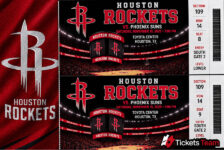
Houston Rockets Tickets
There is a particular kind of noise that only happens in downtown Houston on a Rockets game night. It rolls off Polk Street before you even reach the doors — car horns, ticket scalpers working the corner, the low bass thump leaking out from inside the arena. For a franchise that spent a few lean years rebuilding from the studs up, that noise is back with a vengeance this season, and so is the demand for seats. If you are trying to get into Toyota Center this year, you are competing with a fan base that suddenly has a real reason to show up.
This guide walks through everything that actually matters when you are hunting for Houston Rockets tickets: where the arena sits, who is worth watching, which platforms are legitimate, how the seating bowl breaks down, and how to avoid getting fleeced by a reseller in a parking lot. No fluff, no recycled press-release language — just the practical stuff a Houstonian would tell a friend before their first game of the season.
Toyota Center Is the Center of Gravity
Every Rockets ticket conversation starts in the same place: 1510 Polk Street, Houston, TX 77002. That is Toyota Center, the glass-fronted arena that has anchored downtown’s sports and entertainment district since it opened in October 2003. The building seats a little over 18,000 for basketball, and it sits close enough to Discovery Green and the George R. Brown Convention Center that a night at the game can easily turn into a full evening downtown.
The venue’s general phone line is 713-758-7200, and the dedicated ticket line is 1-866-4HOUTIX (1-866-446-8849). The box office itself is tucked into the northwest corner of the building, accessible off La Branch Street, and the outside windows typically open ninety minutes before tip-off on game days. If you would rather buy in person than online, that corner window is where you want to be.
A Roster That Finally Gives You a Reason to Buy
For years, Rockets tickets were a value play — cheap seats, a young and scrappy team, low stakes. That changed in the summer of 2025. On June 22, the front office pulled off the kind of trade that reshapes a franchise’s ceiling overnight, acquiring Kevin Durant from the Phoenix Suns in a deal that eventually grew into a seven-team blockbuster. Houston sent out Jalen Green, Dillon Brooks, its 2025 first-round pick, and a stack of second-rounders; in return, it landed a future Hall of Famer who already had a working relationship with head coach Ime Udoka from their time together with the Brooklyn Nets and USA Basketball.
Durant slots in alongside a core that had already proven it could win. The Rockets finished the 2025–26 season at 52–30, second in the Southwest Division and fifth in a brutal Western Conference, before a first-round exit to the Lakers. Alperen Şengün continues to anchor the frontcourt as one of the league’s most versatile young centers, and general manager Rafael Stone has kept the supporting cast deep enough to survive injuries. Owner Tilman Fertitta has made no secret of wanting a championship-caliber roster, and ticket prices across the secondary market have responded accordingly — this is no longer the discount option it was five years ago.
Start With the Official Channels
Before you touch a resale site, check the sources closest to the team. The Houston Rockets’ official team page is the first stop for schedule announcements, promotional nights, and links into the league’s ticketing partner. Toyota Center’s own site lists every home date with a “Buy Tickets” button that routes straight into primary inventory, and it is also where season ticket membership and group sales information lives.
Ticketmaster remains the NBA’s official ticketing partner, which means primary-market Rockets tickets — the ones sold directly by the team before anyone resells them — run through that platform. Buying here gets you mobile tickets tied to the official app, protection against fraudulent listings, and access to presales that never make it to the secondary market at all.
If you would rather not deal with a screen, the Toyota Center box office at 1510 Polk Street sells tickets in person, and the arena’s team store — located inside the building at the same address — occasionally has walk-up availability for that night’s game, particularly for weekday matchups against lower-profile opponents.
Season Tickets Versus Single-Game Seats
Season ticket memberships make the most sense for anyone planning to attend more than a handful of games. Members typically get locked-in pricing across all 41 home dates, priority access to playoff ticket windows, flexible exchange privileges if a date does not work, and invitations to member-only events like open practices. Given the current roster, waitlists for premium locations have grown noticeably longer than they were even two seasons ago, so anyone seriously considering a package should reach out to the Rockets’ ticket office sooner rather than later.
Single-game tickets are the more realistic option for most fans, and they are also where the real strategy comes in. Prices for a single seat swing wildly depending on the opponent, the day of the week, and how close you are buying to tip-off. A Tuesday night game against a lottery team can run a fraction of the cost of a nationally televised weekend matchup or a marquee opponent visiting Houston for the only time that season.
There is also a middle path that a lot of fans overlook: partial season plans. Rather than committing to all 41 home games, these packages bundle a smaller slate — often built around weekend dates, or a themed selection like every Friday and Saturday home game — into one purchase. It is a reasonable compromise for someone who wants the convenience and pricing of a membership without the full financial commitment, and it is worth asking the ticket office about directly, since these plans are not always advertised as prominently as full season packages.
The Secondary Market, Honestly Assessed
Once primary inventory sells out — which now happens regularly for weekend and marquee dates — resale platforms become the main path in. Each one has a slightly different personality worth knowing before you commit a credit card number, and the differences matter more than most first-time buyers expect. Fees, in particular, vary widely and are rarely visible until the final checkout screen, so it is worth comparing the all-in total across two or three platforms before finalizing a purchase rather than anchoring on the first listing price you see.
StubHub has the deepest inventory of any resale marketplace and is usually the first place to check for a broad range of price points, from nosebleed seats to courtside. Its FanProtect guarantee covers you if a ticket turns out to be invalid.
SeatGeek is worth a look specifically for its “Deal Score” feature, which rates listings against recent sale prices for comparable seats. It is a fast way to tell whether a ticket is actually a good deal or just priced to look like one.
Vivid Seats frequently runs rewards programs that credit you toward future purchases, which adds up if you are planning to attend several games across a season.
Gametime leans into last-minute buying, with a mobile-first interface built around late deals — if you decide at 5 p.m. that you want to be at the game tonight, this is often where the cheapest same-day seats surface.
AXS is Toyota Center’s official secondary-ticketing partner in addition to running some primary inventory, which makes it a solid hybrid option, particularly for verified resale listings tied directly to the venue.
RateYourSeats earns its name honestly — it layers seat-view photos and amenity information on top of resale listings, which is genuinely useful if you have never sat in a given section and want to know what you are actually paying for before you commit.
None of these platforms are inherently better than another across every scenario; the right one depends on how far out you are buying, how much you already know about the seating chart, and whether you value guarantees over rock-bottom prices.
Reading the Seating Chart Before You Buy
Toyota Center’s bowl breaks down into a handful of distinct experiences, and understanding them saves you from an unpleasant surprise on game night.
The lower bowl, generally sections 100 through 120, puts you close enough to hear sneakers squeak and read facial expressions on the bench. Sections directly behind the baskets in this tier tend to be the cheapest lower-level option, while sideline seats near center court command the highest prices in the building outside of courtside.
Club-level seating sits above the lower bowl and comes with access to indoor lounges, upgraded concessions, and often a more relaxed crowd. It is a strong middle-ground option for fans who want a genuine view without courtside pricing.
The upper bowl, roughly sections 400 and up, is where most of the building’s capacity lives, and it is also where the best per-dollar value tends to show up. The higher rows lose some of the intimacy but gain a full view of both ends of the court, which some longtime fans actually prefer for following team schemes and rotations.
Corner and end-zone seats at any level are consistently the least expensive way into a given tier, which makes them the first place to look if budget matters more than sightline perfection.
Accessible seating is available on every level of the arena, with companion seats built into the same rows rather than segregated to one corner of the building. If you need accessible seating, it is worth calling the box office directly at 713-758-7200 rather than relying entirely on a resale platform’s filter, since availability and exact placement can shift depending on the game.
One more detail that trips up first-time buyers: Toyota Center’s numbering does not always match the intuitive assumption that lower numbers mean better seats within a section. Rows are numbered from the front of each section, but sections themselves wrap around the bowl in a way that puts some “low-numbered” sections behind the basket rather than at center court. This is exactly where a tool like RateYourSeats earns its keep — a quick look at an actual seat-view photo beats guessing based on a section number alone.
Timing the Market
Ticket prices for Rockets games are not static — they move with news, and lately the news has been good. Prices tend to be lowest in the days immediately after single-game tickets first go on sale, before demand catches up to supply. They climb steadily as a game approaches if the opponent is a marquee name or the Rockets are on a winning streak, and they can spike sharply in the final 24 hours before nationally televised matchups.
Conversely, prices for less glamorous weeknight games against non-contenders often soften in the final hours before tip-off, as sellers holding unsold inventory drop prices rather than eat the loss entirely. If your goal is simply “be inside Toyota Center for an NBA game” rather than “see a specific opponent,” watching the secondary market on the day of a lower-demand game can turn into a genuine bargain.
Marquee Matchups Worth Planning Around
Not every home date carries the same weight, and it is worth thinking about your budget in tiers rather than treating every game the same. Opening night and the first game back from any extended road trip tend to draw an energized crowd and a corresponding price bump. Nationally televised weekend games — the ones picked up for ABC, ESPN, or TNT windows — almost always cost more than an equivalent matchup buried on a Tuesday, simply because the broader audience creates extra local demand from fans who want to be in the building for a game their friends elsewhere are watching on television.
Games against Western Conference rivals carry their own premium, particularly anything involving the Warriors or Lakers given the recent playoff history between those clubs and Houston. Holiday-week games — the stretch around Christmas and New Year’s that shows up on most NBA slates — also tend to run higher than average, partly because they double as a night out for people visiting family in town.
If your priority is watching a great basketball game rather than a specific opponent, the smarter play is often a midweek date against a middle-of-the-pack team. You will see the same starting lineup, the same in-arena production, and the same building, typically for a noticeably smaller outlay.
Tickets for Families and First-Timers
Bringing kids to their first NBA game changes the calculus slightly. Upper-bowl seats near center court are usually the better value than baseline lower-bowl seats for a family, since the wider view helps younger fans actually follow the ball rather than losing the play behind a screen of standing adults. The Rockets also run kid-focused promotions throughout the season — theme nights, autograph sessions, and giveaway dates — which are worth checking on the official team page before locking in a date, since a giveaway night can turn an ordinary Tuesday into the best-value ticket of the month.
For a first-timer of any age, arriving closer to an hour before tip-off rather than fifteen minutes beforehand makes a real difference. Warmups, in-arena entertainment, and the pregame introductions are a meaningful part of the experience, and Toyota Center’s concourses get genuinely crowded in the final ten minutes before the opening tip.
Getting Downtown Without the Headache
Toyota Center sits directly on METRORail’s Red Line, with Bell Station just three blocks from the arena doors. Several METRO bus routes also run along Polk and La Branch Streets, and Park-and-Ride service expands for sold-out events, which is worth checking for marquee games where downtown parking gets tight fast.
Drivers coming from any direction will find downtown off-ramps funnel directly toward the arena. For anyone who prefers a dedicated garage over street parking, the Toyota Tundra Garage sits at 1515 Jackson Street, a short walk from the main entrance.
Fueling Up Before Tip-off
Part of the appeal of a downtown arena is that pre-game dinner does not require driving anywhere. Pappasito’s at 1600 Lamar Street is a Houston institution and a reliable option for Tex-Mex before the doors open. The Lobby Bar inside the Hilton Americas, also at 1600 Lamar Street, works well for a quick drink with a view of the skywalk crowd heading toward the arena. Hearsay on the Green at 1515 Dallas Street offers a patio overlooking Discovery Green, which makes for a pleasant wind-down after a day game. And Sire Spirits Social Club, located right at 1510 Polk Street inside Toyota Center itself, is about as close to walk-up convenience as it gets — no need to leave the building at all.
Group Outings and Premium Experiences
For birthdays, corporate outings, or just a big group of friends wanting to sit together, group ticket packages typically offer discounted per-seat pricing once you cross a minimum headcount, along with block seating so nobody gets split up. Suite rentals are the other end of the spectrum — private, catered, and priced accordingly — and they are best booked well in advance for any game against a high-profile opponent, since suite inventory is limited and tends to move fast once the schedule drops.
Buying Smart: A Quick Safety Checklist
A few habits go a long way toward avoiding a ruined game night. Stick to platforms that offer a buyer guarantee rather than peer-to-peer deals arranged through social media or classified ads. Compare a listing’s price against recent sales for the same section before assuming it is a deal. Confirm that mobile tickets transfer through an official app rather than a screenshot or forwarded email, since screenshots are the single most common vector for resale fraud. And if a price looks dramatically lower than everything else for the same section, treat that as a warning sign rather than a stroke of luck — it usually is one.
Frequently Asked Questions
Where is Toyota Center located? Toyota Center is at 1510 Polk Street, Houston, TX 77002, in the heart of downtown Houston.
What is the best way to buy Houston Rockets tickets? Primary tickets sell through Ticketmaster and the Toyota Center website. Once those sell out, resale platforms like StubHub, SeatGeek, and Vivid Seats are the next stop.
Are Rockets tickets more expensive this season? Yes, generally. The acquisition of Kevin Durant in June 2025 and the team’s strong 2025–26 season have pushed demand, and prices, noticeably higher than in recent years.
Is it cheaper to buy tickets at the box office on game day? Sometimes, particularly for lower-demand weeknight games, since unsold inventory occasionally gets discounted close to tip-off. It is not guaranteed, and popular matchups sell out well before the box office windows even open.
How do I get to Toyota Center without driving? METRORail’s Red Line stops at Bell Station, roughly three blocks from the arena, and several bus routes run along Polk and La Branch Streets.
Getting into a Rockets game this season takes a bit more planning than it did a few years ago, but the payoff is worth the extra effort. Start with the official channels, know your seating chart before you shop resale, keep an eye on pricing patterns if your schedule is flexible, and give yourself enough time downtown to grab dinner before the doors open. Toyota Center on a big night is one of the better arena experiences in the NBA right now — the trick is simply getting through the door.